Description
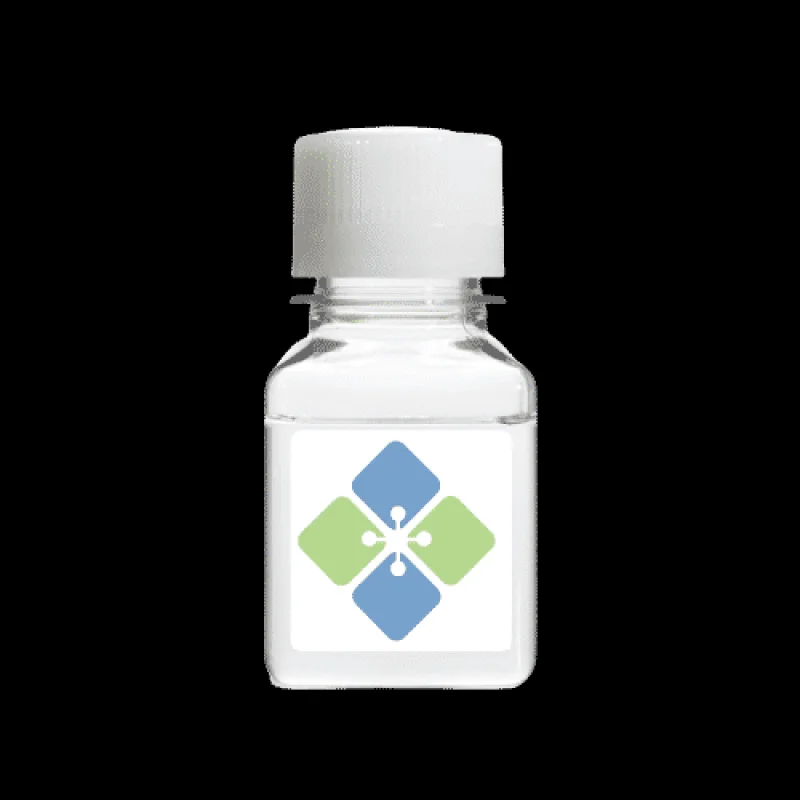
Magnetic Beads Stabilization Buffer
| Catalog number: | B2010186 |
| Lot number: | Batch Dependent |
| Expiration Date: | Batch dependent |
| Volume/Weight: | 50 mL |
| pH: | 7.4 |
| Supplied as: | Ready-to-use buffer |
| Appearance: | Solution |
| Applications: | validated buffer for the stabilization of a wide variety of magnetic beads (with or without conjugates) used in chemiluminescence assays. This product extends the shelf life of most CLIA based kits (for up to 12 months when stored at 2-8C). |
| Storage: | 2-8C |
| Keywords: | Magnetic beads stabilizer, Magnetic particles stabilization buffer |
| Grade: | Biotechnology grade. All components are highly pure (minimum 99%). All solutions are made with Type I ultrapure water (resistivity>18 M-cm) and are filtered on a 0.22 um. |
Magnetic Beads Stabilization Buffer is a biotechnology-grade reagent designed to preserve the integrity and functionality of magnetic beads used in chemiluminescence immunoassays (CLIA). Supplied as a ready-to-use solution at physiological pH (7.4), this buffer is validated for stabilizing both unconjugated and conjugated magnetic particles. It prevents aggregation, maintains surface activity, and extends the shelf life of bead-based assay components for up to 12 months when stored at 28C, making it ideal for kit formulation and long-term reagent storage.
Researchers and assay developers working in diagnostics, molecular biology, and immunochemistry rely on magnetic bead platforms for high-throughput and sensitive detection. This buffer supports consistent assay performance by minimizing bead degradation and preserving conjugate stability. Filtered through 0.22 m membranes and prepared with ultrapure water, it ensures minimal background interference and high reproducibility. Supplied in a 50 mL format, it integrates seamlessly into automated and manual workflows for CLIA and other bead-based assay systems.
Key benefits:
-
Stabilizes magnetic beads with or without conjugates for CLIA applications
-
Extends shelf life of bead-based kits up to 12 months at 28C
-
Maintains particle dispersion and surface activity
-
Filtered through 0.22 m membranes using ultrapure water
-
Supplied in 50 mL format for scalable assay development
Products are for in vitro research use only (RUO).
References
-
1: Moerland CP, van IJzendoorn LJ, Prins MWJ. Rotating magnetic particles for
lab-on-chip applications a comprehensive review. Lab Chip. 2019 Mar
13;19(6):919-933. -
2: Wu K, Su D, Liu J, Saha R, Wang JP. Magnetic nanoparticles in nanomedicine: a
review of recent advances. Nanotechnology. 2019 Dec 13;30(50):502003. -
3: Lin G, Makarov D, Schmidt OG. Magnetic sensing platform technologies for
biomedical applications. Lab Chip. 2017 May 31;17(11):1884-1912. -
4: Pei N, Cheng X, Huang Z, Wang X, Yang K, Wang Y, Gong Y. Aggregation process
of paramagnetic particles in fluid in the magnetic field. Bioelectromagnetics.
2016 Jul;37(5):323-30. -
5: Franzreb M, Siemann-Herzberg M, Hobley TJ, Thomas OR. Protein purification
using magnetic adsorbent particles. Appl Microbiol Biotechnol. 2006
May;70(5):505-16. -
6: Vereda F, de Vicente J, Hidalgo-Alvarez R. Physical properties of elongated
magnetic particles: magnetization and friction coefficient anisotropies.
Chemphyschem. 2009 Jun 2;10(8):1165-79. -
7: Zhou C, Boland ED, Todd PW, Hanley TR. Magnetic particle characterization-
magnetophoretic mobility and particle size. Cytometry A. 2016 Jun;89(6):585-93. -
8: Bi Y, Pan X, Chen L, Wan QH. Field-flow fractionation of magnetic particles
in a cyclic magnetic field. J Chromatogr A. 2011 Jun 24;1218(25):3908-14.