Description
Polystyrene Beads Conjugated to BSA (20 nm) Research Use Only
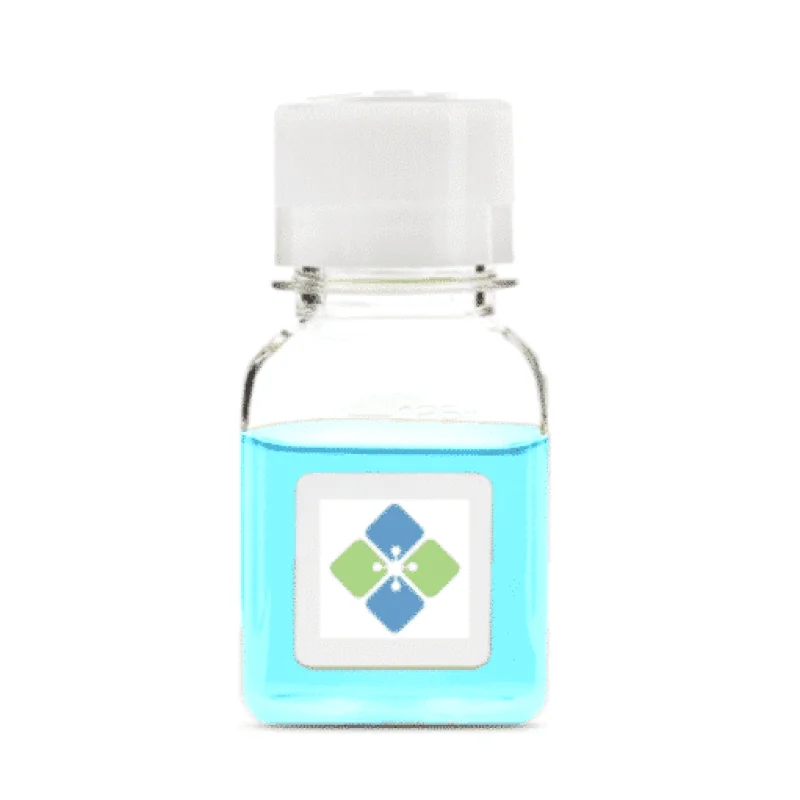
Polystyrene Beads Conjugated to BSA (20 nm) are ultra-small 20 nm polystyrene nanoparticles covalently coated with bovine serum albumin (BSA). Supplied as a 1% suspension in 2 mL volume, these BSA-functionalized nanobeads provide a high surface area-to-volume ratio and a stable protein corona, making them an excellent model system for studying nanoparticleprotein and nanoparticlecell interactions at the nanoscale.
| Catalog number: | B2013506 |
| Lot number: | Batch dependent |
| Expiration Date: | Batch dependent |
| Amount: | 2 mL |
| Molecular Weight or Concentration: | 1% suspension |
| Supplied as: | Suspension |
| Applications: | Nanoparticleprotein interaction studies, phagocytosis and cellular uptake assays, protein adsorption kinetics, nano-immunoassays, and biophysical characterization of nanoparticle coronas |
| Storage: | 2-8C |
| Keywords: | Polystyrene beads |
| Grade: | Biotechnology grade. All products are highly pure. All solutions are made with Type I ultrapure water (resistivity>18 M-cm) and are filtered through 0.22 um. |
Scientific Overview
20 nm polystyrene beads conjugated with bovine serum albumin (BSA) offer a nanoscale platform with significantly higher surface area compared to micron-sized beads. The BSA coating creates a well-defined protein corona that modulates surface charge, stability, and biological interactions, making these nanoparticles valuable for investigating how size and surface chemistry influence protein adsorption, cellular uptake, and immune recognition.
These 20 nm BSA-conjugated polystyrene beads are suitable for:
- High-resolution studies of protein adsorption and nanoparticle corona formation
- Nanoscale phagocytosis and endocytosis assays in immune cells
- Investigation of size-dependent effects on cellular uptake and trafficking
- Development of nanoparticle-based immunoassays and diagnostic platforms
- Biophysical characterization of nanoparticlebiomolecule interactions using techniques such as microchannel resonators
- Model systems for studying surface adsorption and hopping dynamics in complex media
Usage & Handling Guidance
Store the 1% suspension at 28 C. Do not freeze. Gently vortex or pipette the suspension to ensure uniform resuspension before each use. Sonication may be required for optimal dispersion after prolonged storage.
- Recommended applications: Nanoparticleprotein interaction studies, cellular uptake assays, protein corona research, and nano-scale immunoassays
- Working concentration: Dilute to 0.010.1% solids in PBS or appropriate assay buffer as needed
- Stability: Stable when refrigerated; resuspend thoroughly and check for aggregation before use
- Handling: Use in sterile conditions for cell-based experiments; compatible with standard physiological buffers
What You Get
- 2 mL of 20 nm Polystyrene Beads Conjugated to BSA as a 1% suspension
- High surface area nanoparticles with stable BSA coating
- Ready-to-use format for nanoscale biochemical and cellular studies
- Biotechnology-grade product manufactured under controlled quality conditions
- For research use only (RUO)
Why Researchers Choose It
- Ultra-small 20 nm size ideal for high-resolution nanoparticle studies
- Stable BSA conjugation for reproducible protein corona formation
- Excellent model for size-dependent effects in cellular uptake and protein adsorption
- Versatile platform for nanomedicine, immunology, and biophysical research
- High-quality 1% suspension suitable for sensitive experimental applications
This product is for Research Use Only (RUO). It is not intended for diagnostic or therapeutic use in humans or animals.
References
- Cao YC, Wang Z, Yang R, Zou L, Zhou Z, Mi T, Shi H. Quantum dots encoded Au coated polystyrene bead arranged micro-channel for multiplex arrays Talanta. 2016 Jan 1;146:749-53.
- Siiman O, Burshteyn A, Insausti ME. Covalently Bound Antibody on Polystyrene Latex Beads: Formation, Stability, and Use in Analyses of White Blood Cell Populations J Colloid Interface Sci. 2001 Feb 1;234(1):44-58.
- DeBell KE, Taplits MS, Hoffman T, Bonvini E. T lymphocyte aggregation with immobilized anti-TCR-antibodies is dependent upon energy and microfilament assembly Cell Immunol. 1990 Apr 15;127(1):159-71.
- Miyauchi M, Giummelly P, Yazawa S, Okawa Y. Adhesion of Candida albicans to HeLa cells: studies using polystyrene beads Biol Pharm Bull. 2007 Mar;30(3):588-90.
- Nejadnik MR, Jiskoot W. Measurement of the average mass of proteins adsorbed to a nanoparticle by using a suspended microchannel resonator J Pharm Sci. 2015 Feb;104(2):698-704.
- He J, Tang JX. Surface adsorption and hopping cause probe-size-dependent microrheology of actin networks Phys Rev E Stat Nonlin Soft Matter Phys. 2011 Apr;83(4 Pt 1):041902.
- Wolf H, Gattringer C, Wick G. Avian antigen binding cells: enrichment methods J Immunol Methods. 1979;25(1):77-88.
- Wofford JA, Wright JR. Surfactant protein A regulates IgG-mediated phagocytosis in inflammatory neutrophils Am J Physiol Lung Cell Mol Physiol. 2007 Dec;293(6):L1437-43.
- Perrin P, Versmisse P, Sureau P. A rabies agglutination test (RAT) for rabies antibody detection J Biol Stand. 1988 Oct;16(4):281-6.